
The toilet training process can be difficult, on this page we have some information from specialist services to help support you and your little one.
On this page
- When to start toilet training with your child
- Help with toilet training
- Toileting problems
- Starting Reception - The Potty Training Guide
- Toilet training for children with additional needs
When to start toilet training with your child
For more information on when to start, you can visit It's potty time! (Health for under 5s website)
Learn more about Toilet Training from PACEY (The Professional Association for Childcare and Early Years), they have useful pointers on when is the right time to start and some tips on getting it right in this 7-minute video:

The National Childbirth Trust website has some useful potty training information including: signs your child is ready, training at night, tips for girls, tips for boys and more
Five signs your child is ready for potty training (NCT)
Most parents start thinking about potty training when their child is between 2 and 2 and a half, but there's no perfect time. Some people find it easier to start in the summer, when there are fewer clothes to take off and washed clothes dry more quickly.
Try potty training when there are no great disruptions or changes to your child's or your family's routine. It's important to stay consistent, so you don’t confuse your child.
ERIC has great information and advice for parents and carers to encourage children to learn how to use the potty independently in the ERIC Helpline podcast, watch the 5-minute video below.
More toilet training support including videos, guides to download, and FAQs can be found on the Potty training: how to start and the best age to potty train (ERIC)
Help with toilet training
Learning to use the toilet is a new process for a child which happens at different times for everyone, but you should follow your child's pace. Take things slow.
- by age 1, most babies have stopped doing poos at night
- by age 2, some children will be dry during the day, but this is still quite early
- by age 3, 9 out of 10 children are dry most days – even then, all children have the odd accident, especially when they're excited, upset or absorbed in something else
- by age 4, most children are reliably dry during the day
Once your toddler has the hang of daytime potty training, it will be time to move onto nighttime, which for some can be a little difficult.
The Nottinghamshire Family Hub Network offers Potty Training courses, along with support and guidance for families. To learn more and find contact details for your local Family Hub, visit the Family Hub Networks | Parenting and family support (Nottinghamshire County Council).
You can find out more about potty training or find tools and advice to support you, below:
- Potty training at night (NCT)
- All aboard the Toilet Train: Get ready for school (ERIC)
- It's potty time! (Health for Under 5s)
- Your video guide to toilet training (Health for Under 5s)
- Top tips for potty training (Health for Under 5s)
Toileting problems
Some children take to using a potty quickly, others take more time. Do not worry, it's normal to have questions or want to seek support from a professional.
There are many different reasons a child may struggle with toilet training, some of these could be bowel and/or bladder problems or even anxiety. But this doesn't mean you cannot successfully toilet train. This process takes time.
You can find information and support with Potty training problems (ERIC) here.
ERIC has a free phone helpline on 0808 801 0343 (Monday to Thursday, 10am to 2pm) or you can ask for a call back or email.

With so many different problems that your child might face during toilet training, it can be hard to know what to do to support them, The Health for Under 5's website has some Tips to deal with specific toileting problems (Health for Under 5s)
Starting Reception - The Potty Training Guide
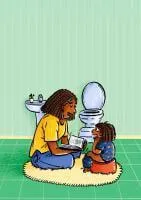
Potty training is an important milestone in your child’s development. We understand that all children develop at their own pace, but research shows it's best for your child’s bowel and bladder health to stop using nappies, including reusable nappies, pull-ups and training pants, between 18 and 30 months.
It’s really important that children are out of all nappies well in advance of starting Reception year in school. The only exception should be children with a diagnosed medical need, such as a bladder or bowel condition.
Being out of nappies not only helps children to feel confident, healthy and part of the group, it also means teachers can spend more time teaching and supporting children’s development in other ways.
You can find out more and download The Potty Training Guide [PDF] (opens in new tab) here.
Starting Reception content created by startingreception.co.uk
Toilet training for children with additional needs
Learning to use the toilet can be challenging for some children that have additional needs, some of the common challenges that they can face are;
- knowing when they need to use the toilet
- Telling you they need to use the toilet
- knowing the different types of toilets/ how to use them
- sensory and/or environment challenges
- Wiping/ cleaning themselves
- Smearing
You can find help and support for your child with additional needs below: