
Learn about some of the services, support and resources that can help you and your child during the early years of child development.
On this page
- What is child development and the Early Years Foundation Stage (EYFS)
- Brain development
- Supporting child development
- Speech and language development
- Health and development reviews
- Benefits of attending Early Years settings
- Neurodiversity
- Equality and diversity
Everything that happens to a child within the first few years of life shapes their future success. Early experiences influence how well children do at school, their life-long health and wellbeing, and their achievements later in life.
Monitoring your child’s progress, providing a good learning environment at home, and going to high quality early years childcare settings are key to ensuring your child has good development.
You can support your child’s development by visiting your local Family Hub and finding out about their services and support. Visit Family Hub Networks (Nottinghamshire County Council)
What is child development and the Early Years Foundation Stage (EYFS)
Children develop more rapidly during the first five years of their lives than at any other time. Children learn and develop through playing, exploring, being active, creative and being asked questions to help their thinking.
The Early Years Foundation Stage (EYFS) sets out how schools and childcare providers need to support the learning, development and care of children, from birth to age five. The guidance was revised and updated in 2025.
You can find the statutory guidance set by government at Early years foundation stage (EYFS) statutory framework (GOV.UK).
Parent guides
Here are some guides for parents and carers to the EYFS
- A guide to the EYFS for parents and carers (Early Years Alliance)
- What to expect in the Early Years Foundation Stage: a guide for parents (Foundation Years)
- Information for parents (Birth to 5 Matters)
You can also download the Birth to 5 Matters information for parents PDF leaflet. Download Birth to 5 Matters Parent Leaflet [PDF]
Birth to 5 Matters
Birth to 5 Matters provides guidance to early years professionals on how to support children's progress towards all the statutory EYFS Early Learning goals.
Read more about child development on the Birth to 5 Matters website.
Brain development
Find out about brain development during the first six months of your babies' life at Baby brain development (Solilhull Approach NHS Team).
Read more about how a child's brain develops, from being a baby through to becoming a teenager at Brain development through childhood (Solilhull Approach NHS Team).
Supporting child development
Your child's first two years
Welcome to Your Child's First Two Years is a guide produced by Nottinghamshire Family Hubs to your baby’s first 1001 days, from conception to two years. This booklet shows you the things to expect in the first two years of your baby's life.
Download Your Child's First Two Years booklet [PDF]
Parenting courses
Solihull Approach brings together NHS health professionals and child and family practitioners, together with schools and parents to develop training to support people who work with children, as for ALL parents who want to support and nurture emotional health. They have a range of courses and resources, some are available free.
For people working with children, visit the Solihull Approach website
For parents, visit the e-learning for parents and families In Our Place (Sollihull Approach)
Early Movers
Find practical ideas for activities to support the physical development of babies, toddlers and preschool children. Using a range of games and activities designed to help develop children's core skills such as rolling, crawling, walking, catching.
Visit the Early Movers website.
EasyPeasy
This is a free app for parents and carers, giving lots of simple, fun play and activity ideas to help children aged 0 to 5 learn and develop as they play.
To find out more and download the app, visit EasyPeasy for parents and carers
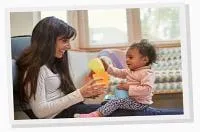
Look Say Sing Play
Right from birth, every time you talk, sing or play with your baby, you're not just bonding, you're building their brain.
NSPCC have teamed up with Vroom&trade to give you some fun and easy tips to help you bring even more Look, Say, Sing and Play into your daily routine with your baby. For children aged 0 to 2.
When you sign up, they’ll send you a new tip, tailored to your child's age, each week.
Visit: Look, Say, Sing, Play (NSPCC).
Low cost, no cost play activities
The booklet designed by Nottinghamshire Family Hubs gives lots of great home play and learning ideas. Download, Play at Home booklet [PDF] (opens in new tab)
Find more activities you can do at home and out and about in our Things to do at home (Your Notts Directory)
Speech and Language development
Help your child's overall development, including their speech and language, through time together at home, and out and about.
Have a look at Nottinghamshire's Start Talking Together (Your Notts Directory)
Health and development reviews
At 12-months your child will have a review with the Healthy Family Teams.
Find out what to expect at a routine 12-month review in this 1-minute Healthy Family Teams YouTube video.
You will receive a 2 to 2.5 year review from the Healthy Family Teams including an assessment of your child’s social, emotional, behavioural and language development.
If your child is in an early years setting, they will also have a 2-year progress check.
Find out what to expect at a routine 2 to 2.5 year review in this 1-minute this Healthy Family Team YouTube video.
To find out about health and development reviews you receive before 12 months have a look at Caring for your new baby (Your Notts Directory)
You can also find out more on the Healthy Family Teams website.
Benefits of attending Early Years settings
Enjoying some time in early years settings can benefit all children. Children aged 2, 3 and 4 who spend time in an early years setting will have opportunities to:
- Make friends, to share and take turns
- Communicate with others and listen to them
- Be independent and become aware of other’s needs
The impact of these experiences is long-lasting. They give children confidence and help to prepare them for school and beyond. Visit our childcare pages to find childcare providers near you, or learn about the financial help you can get with childcare costs.
Visit Childcare and Early Learning (Your Notts Directory)
Neurodiversity
Every child develops differently and at their own pace, some children may have conditions which can affect learning, social behaviour, and other aspects of daily functioning also known as neurodiversity. Some of these include, Autism Spectrum Disorder (ASD, Autism) ASD, Attention Deficit Hyperactivity Disorder ADHD and Learning difficulties (such as dyslexia, dyscalculia, dyspraxia)
The Neurodevelopmental Support Team in Nottinghamshire, part of the Family Service, offers early assistance to families concerned their child may have neurodevelopmental behavioural support needs suggestive of Autism or ADHD. Find out more on our service listing Neurodevelopmental Support Team (The Family Service)
Find help and information about Autism and ADHD in Nottingham and Nottinghamshire on the Minds of all Kinds website.
Learn more about neurodiversity with the articles on Neurodiversity (Health for Teens).
Equality and diversity
Talking to your child about culture and racism
As your child grows up, they may have questions about their own heritage, culture or that of their friends. Find some advice on staying culturally connected at Talking to your child about culture (Family Lives).
Learn about how to help your child connect with their culture in this 3-minute YouTube video.
Racism
Supporting you to raise anti-racist children
As parents and carers, we all want to raise our children to be good human beings, and part of that is finding a way to navigate difficult, even painful topics with our children. They need to hear from us, both out loud and by example, what we know to be right and what we know to be wrong.
The Black Lives Matter movement has raised the profile of how we all need to play a part in being part of the change to create a more equal world.
Find out how to talk to your children about racism at Talking to children about racism (NSCC).
You can also download resources on talking to children, and talking to young people about racism at Talking with children and young people about race and racism (British Red Cross).
Laura Henry-Allain, author of 'Jo-Jo and Gran-Gran', supported by Mattel, wrote a booklet in 2020 to give parents simple advice on how to have conversations with their children about being anti-racist.
Download: Supporting_you_to_raise_anti-racist_children[PDF] (opens in new tab)
Celebrating Black History
These two guides to Black History Month and Black Lives Matters provide resources, activities, and tips for families to help empower children to work towards racial equality.
Download them from A Parent’s Guide to Black Lives Matter and A Guide to Black History Month (Yoopies)