
Find advice and support from the Speech and Language experts within the NHS and the Speech and Language UK team.
Nottinghamshire Healthcare's Speech and Language Service
We work closely with our colleagues at Nottinghamshire Healthcare’s Speech and Language Service, who offer a range of support.
For more information, go to: Children's Speech and Language Therapy (Nottinghamshire Healthcare NHS Foundation Trust)
Nottinghamshire Healthcare Speech and Language Advice Line is available for parents and carers of children aged 0 to 19 years and for young people aged 16-19.
Call: 0300 123 3387 OPTION 1
Nottinghamshire and Nottingham City (except Bassetlaw)
Monday and Tuesday 9.30am to 4.30pm
Wednesday, Thursday and Friday 9am to 12.30pm

Speech and Language UK
The children’s communication charity, provides support to parents, carers and practitioners in helping children develop their speech, language and communication skills.
They have a useful Progress Checker to help guide you, visit Child's Progress checker (Speech & Language UK)
Further information for parents, carers and practitioners:
- Resource library for families (Speech and Language UK)
- 5 to 7 years (Speech and Language UK)
- 7 to 11 years (Speech and Language UK)
- 11 to 14 years (Speech and Language UK)
- 14 to 17 years (Speech and Language UK)
- 18+ years (Speech and Language UK)
Practitioners can register free on the website and can gain access to all the information on their website, including some great advice and helpful resources.
Register at, Register for What Works (Speech and Language UK)
Primary school aged children
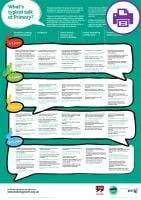
To support parents and carers, this poster describes the stages of typical language development, with examples of what you might see and hear in a Primary School classroom or school environment.
Download, What's typical talk at Primary School [PDF]
Secondary school aged children
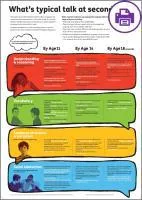
To support parents and carers, this poster describes the stages of typical language development, with examples of what you might see and hear in a Secondary School classroom or school environment