

Find out things you, your partner and family can do, whilst you're expecting your baby, to help grow their language and communication skills.
What your baby can do before they are born
Babies hearing usually starts from around 3–4 months of pregnancy. From around 10 weeks your growing baby can recognise their mum’s voice and from around 16 weeks can feel vibrations. They can feel and hear deeper male voices even better than higher pitched female voices, so it’s important for dads to talk to them too. Your voices will help calm them and support their brain development.
Interestingly, scientists have found that unborn babies can recognise the language their mother speaks and respond differently to words in different languages. They also found that newborns in France and German cry in a different way, in a pattern that resembles speech patterns from the country they were born in.
BBC Tiny Happy People has some tips and advice on bonding and talking to baby during pregnancy:
- Talking to your bump, what are the benefits? (CBeebies Parenting)
- Tips and advice for parents to be (CBeebies Parenting)
How can you help
Communication is the basis of all relationships, and this starts for your baby even before they are born.
It's never too soon to talk to and sing to your little one and stroke your bump. You can talk to your baby before they are born and from around 16 weeks they can hear you and feel the vibrations your voice makes and dads it’s important you talk to your bump too, since they can hear and feel vibrations from dad’s lower pitched voice better than mum’s higher pitched one.
The tips and advice from Tiny Happy People are useful to follow to bond with your growing baby. Learn how you can communicate with your baby from 24 weeks with this 3-minute and 50-second video produced by Small Talk.
Find out 'What we learn before we're born', in this 16-minute Ted Talk video by Science writer Annie Murphy Paul.
Learn 'What can my baby understand and feel in the womb' in this NHS Choices 1-minute and 49-second video.
Talking to your baby before they are born helps you and your partner, and even siblings, start to build the bond with your baby and when they are born, they will recognise the sound of your voices, helping them feel relaxed and safe. Lots of parents like to talk or sing to their baby, and there is lots of evidence that babies respond well to the deeper tones from a male voice. It doesn’t matter what you say or sing, it’s the fact that you are doing it that makes the difference, but if you are not sure where to start, how about a favourite song, nursery rhyme or lullaby such as Rock a Bye Baby or Twinkle Twinkle Little Star.
Learn how a baby responds to the voice of their parent in this 15-second video.
Watch how a Newborn baby recognises their father's voice in this 49-second video.
You can also go to Things to do at home-Pregnancy and birth (Your Notts Directory) (opens in new tab) section, for more ideas on communicating with your baby, and activities you can try at home
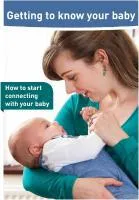
Getting to know your baby
This Public Health Getting to know your baby leaflet [PDF] provides new mums with some suggestions on how you can start connecting with your baby. From talking to your bump, skin to skin contact and talking to your baby from day one.
What to do if you need advice
- Speak to your midwife or GP
- Sign up for the Baby Buddy app
- Go to Talking to your bump in Pregnancy - Health for Under 5sfor more tips.