
Find information, advice and guidance on different routes into work for young people with SEND, including what your rights are and organisations or services who can assist you with finding employment.
On this page
- Route into work options
- Study programmes
- Supported internships
- Traineeships
- Apprenticeships
- Apprenticeship opportunities in Nottinghamshire
- Thinking about becoming self-employed?
- Careers advice
- The Equality Act and employment support
- Employment support and opportunities in Nottinghamshire
- Nottinghamshire Opportunities website
- Independent travel training
Route into work options
With the right opportunities, preparation and support, young people with SEND can move into employment.
Paid work is good for us. It can give us financial independence, friends, and it’s good for our physical and mental health.
That means that all young people with SEND and the adults who support them (including parents, teachers and tutors) need to know what choices are available. They should be thinking about the best way to prepare for paid work, based on young people’s career hopes and qualifications.
What are the different options?
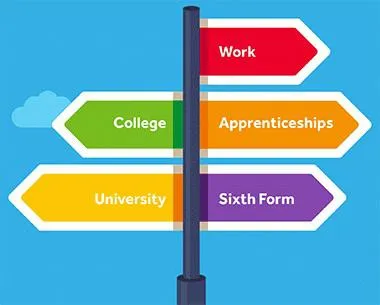
There are different options for routes into work such as:
- study programmes
- supported internships
- traineeships
- apprenticeships.
Route into work options for young people with an Education, Health and Care plan (EHCP)
The Integrated Children’s Disability Service (ICDS) holds an annual Preparing For Adulthood (PFA) event for young people with education, health and care plans in Year 9 and above.
The event gives the young people and their parents or carers the opportunity to meet with a variety of education, health and care professionals and gather useful information to support them to make informed choices about their futures as they move into adulthood.
These events offer lots of information around pathways to employment.
Learn more about Preparing For Adulthood events on the SEND Local Offer: Post 16, further and higher education page
The National Development Team for Inclusion has also produced a guide on the routes into work.
Study programmes
All education for 16 to 19-year-olds' is delivered as a ‘study programme.’
This programme brings together the help that young people need to get a job and live independently. Study programmes include qualifications, work experience and life skills.
Young people can generally access free full-time education from ages 16 to 18 (finishing by age 19). This could be extended up to age 25 if a young person has an education, health and care (EHC) plan and continues to access education or training after the age of 19 years.
What is the purpose of a study programme?
All study programmes must have a ‘core aim’ or main focus which should reflect what the young person wants to do when they leave school or college.
This can be:
- a vocational qualification such as a BTEC (Business and Technology Education Council qualification) or NVQ (National Vocational Qualification) to prepare for work
- work experience, which can be used to gain vocational qualifications by demonstrating work-based skills
- GCSE or equivalent Maths and English.
Study programmes should be designed with employment as the long-term goal.
Every young person should be given careers information, advice and guidance that will help them to choose the best courses and qualifications that mean employers will be more likely to offer them a job. This includes information about what kind of jobs exist locally, so young people can prepare for jobs that will be available to them.
Where can I find out more on post-16 education?
You can find out more about post-16 education, including the different options available and how to apply for them on the SEND Local Offer: Post-16 education page
Supported internships
Supported internships are a type of study programme which help young people aged between 16 and 24 with Education, Health & Care Plans (EHCP’s) to move out of education and into paid employment.
What makes them different is that young people do most of their learning at work ‘on the job’.
A supported internship could be the right choice if you know you learn best by ‘doing’ (known as a ‘place and train’ approach) and where you need more time or support than would be available through a traineeship or apprenticeship.
Young people and their employers will get the help they need to learn from a job coach. The job coach will support them until they both feel confident that the young person can do the job by themselves.
The supported internship will typically last a year and young people won’t get paid, but they should be ready to move into a paid job at the end because of the skills and experience they've gained.
You can read more about supported internships and what they offer in these leaflets:
- Download A route into work for young people with special educational needs and disabilities leaflet [PDF]
- Download the Supporting you towards employment leaflet [PDF]
All supported internships should be personalised to the needs of the young person. They should also be flexible so that they meet the needs of the young person and the employer.
Hosting a supported internship can bring many benefits to a business. Read about these benefits by downloading the leaflet: Supported internships: Being a host employer leaflet [PDF]
Providers offering supported internships
These are the current providers offering supported internships:
- North Notts College in Worksop (part of RNN Group) offer a 3 day per week bespoke programme.
- West Notts College in Mansfield offer a 3 day per week bespoke programme and also run the DFN Project SEARCH 5 day programme at King’s Mill Hospital.
- Nottingham College run 2 DFN Project SEARCH 5 day programmes: City Hospital and QMC.
- Newark College (part of Lincoln College) offer a 3 day per week bespoke programme.
- Landmarks Specialist College through their WayFinder Employment Service offer a 3 day per week bespoke programme covering various locations across the County.
- Portland Specialist College offer a 3 day per week bespoke programme covering various locations across the County.
DFN Project SEARCH programmes available in Nottinghamshire
DFN Project SEARCH is a unique education to work transition programme for students with an EHCP. It is a supported internship programme that is delivered over an academic year for young people with learning disabilities and autism.
- Interns will participate in three rotational work placements, exploring different roles and gaining a wide variety of experience and new skills.
- Opportunities are diverse and include health care, universities, manufacturing facilities and more.
- Interns work with a team that include a tutor, job coaches and host business.
- The outcome goal is full time paid employment.
- The five-day programme is based within a host employer.
Host employers include:
- City and QMC Hospitals via Nottingham College
- King’s Mill Hospital via West Notts College
- Amazon at East Midlands Gateway via Derbyshire County Council
Interns will:
- increase Independence, self-confidence and self esteem
- build personal and professional relationships
- participate in a curriculum focused on soft skills required to maintain employment
- gain competitive transferable and marketable job skills.
What qualifications do I need to do a supported internship?
None. Commitment, motivation and enthusiasm to work are the most important things.
If young people don’t have a grade C or 4 at GCSE or a Level 2 Functional Skills in English or maths, they will continue studying English and maths at a suitable and stretching level while they do their supported internship. They may also study for other qualifications that will help them move into work.
Do I need an EHC plan to do a supported internship?
Yes. Please speak to your tutor or EHCP Co-Ordinator at your local authority if you think this is an option for you.
Where do I find out more about supported internships?
Find out more on the Government's website at Providing supported internships for young people with an EHC plan (GOV.UK)
You can also download and view a map that shows where previous placements have taken place in Nottinghamshire and Nottingham City.
Download the Education providers and supported internships map [PDF]
To apply for the current DFN Project Search opportunities visit:
For the DFN Project Search Supported Internship programme with Amazon, you can ask for more information by emailing supportedinternships@derbyshire.gov.uk
To find out more, download, DFN SEARCH flyer [PDF]
For further information, go to DFN Project SEARCH
What's next? podcast
Hear Julie Grummet, the Senior Practitioner of SEND Employability for Nottinghamshire County Council, explain more about supported Internships. What they are, how they work, and who they are for, by listening to this 25-minute 'What's next?' podcast produced by Bracken Hill School’s
Traineeships
Traineeships are for young people who want to work, but who need extra help and support. They offer young people training and work experience to give them the skills and confidence to get a job or apprenticeship, alongside support to improve their maths and English. They typically last for six months but can be extended for up to a year.
The three main parts of a traineeships are:
- a work placement
- work preparation training
- English and maths where the student is still to achieve GCSEs at grade C or 4, or the Functional Skills equivalent.
Colleges, training providers and employers can bring these three things together in the best way to support each young person.
What qualifications do I need to do a traineeship?
Young people need to be:
- aged between age 16 and 24 years
- qualified below Level 3 (in other words, below A level)
- with limited experience of work.
A traineeship could be for you if you are motivated to work, and likely to be ready to start paid work within six months or need extra support before you move onto an apprenticeship.
Do I need a an EHC plan to do a traineeship?
No. As long as you meet the requirements above, you can take part, including if you have an EHC plan. Young people with SEND can access additional support if they need it.
Where do I find out more about traineeships?
Contact your local college or training provider to see if they are offering traineeship opportunities
Apprenticeships
Apprenticeships combine training in a job with study. Depending on the level, apprenticeships take between 1 to 5 years to complete. Apprentices will:
- Work alongside experienced staff
- Gain job-specific skills
- Earn a wage and get holiday pay
- Get time for study related to their role (usually one day a week).
Apprenticeships are available at different levels, from level 2 to level 7. As the levels get higher, the apprenticeships become more advanced. For example, a level 2 (intermediate) apprenticeship is equivalent to GCSE level, and levels 6 and 7 are equivalent to a degree.
Young people can apply for apprenticeships while they are still in school or when they are in college. To start one, they will need to be:
- age 16 or over by the end of the summer holidays
- living in England
- not in full-time education.
What qualifications does a young person need to do an apprenticeship?
Applying for an apprenticeship is a competitive process. Apprenticeships are jobs, so employers decide who they are going to employ, and what the entry requirements should be. For example, some employers may ask that the young person has GCSEs including English and maths at certain grades. But as a general rule, apprenticeships should be open to everyone over the age of 16 years.
There are, however, English and maths ‘exit requirements’ for apprenticeships set by the Government (qualifications you must achieve to complete your apprenticeship). These vary according to the level of apprenticeship but as a minimum they will be:
- Level 2 – an English and maths qualification of at least level 1 (Functional Skills Level 1 or GCSE grade E or 2). You must also study for a level 2 qualification in English and maths and take the tests, before taking the end-point assessment or achieving an apprenticeship framework
- Level 3 or above – level 2 Functional Skills or GCSE qualifications grade A* to C (or 9 to 4) in English and maths before taking the end-point assessment or achieving an apprenticeship framework
If a young person has a learning difficulty or disability that prevents them achieving the standard English and maths requirements for their apprenticeship there may be the option to study English and maths at a lower level. Please speak to your employer or training provider for more information.
As with any other job, an applicant can request extra support known as ‘reasonable adjustments’ for help with the application process and for support on the apprenticeship itself (both at work and while studying). Young people should speak to their tutors or careers advisers at school or college if they have SEND and think they should have reasonable adjustments.
Does a young person need a statement of special educational needs or EHC plan to do an apprenticeship?
No – apprenticeships are open to everyone aged over 16 living in England not in full-time education.
What support is available for apprentices with additional needs?
The Government provides extra funding to support apprentices with SEND.
- Payments of £1000 each are available for training providers and employers with apprentices aged 16 to 18, or aged 19 to 24 who have an EHC plan or were previously in care.
- Training providers can also claim learning support of up to £150 per month (up to £1,800 per year) from the ESFA (Education and Skills Funding Agency) to support reasonable adjustments under the Equality Act for an apprentice’s additional costs, and excess learning support up to £19,000.
Funding to support apprentices in the workplace is also available through Access to Work - Department of Work and Pensions (GOV.UK).
If a young person has, or previously had an EHC plan or statement, there may be flexibility around the English and maths qualifications they would need to complete their apprenticeship.
Read more about English and maths flexibilities for apprentices with learning difficulties and disabilities - Department of Education (GOV.UK)
Where do I find out more about apprenticeships?
Find out more at Become an apprentice (GOV.UK)
This includes a link to the Find an Apprenticeship service, where apprenticeship vacancies are listed and can be applied for.
Where an employer is part of the Disability Confident employer scheme, you can filter for these employers and the Disability Confident logo will display on their vacancies in the search.
Inclusive apprenticeships
‘Inclusive’ or ‘Supported’ apprenticeships are no different to other apprenticeships, they use the same frameworks and application process.
The terms ‘Inclusive’ or ‘Supported’ are used to highlight that additional elements of support can be accessed by the employer, the training provider and the apprentice.
To learn more, download the All about inclusive apprenticeships leaflet [PDF]
Apprenticeship opportunities in Nottinghamshire
For more specific information about apprenticeships in Nottinghamshire, including access to details of current vacancies, visit:
- Apprenticeships in Nottinghamshire (Nottinghamshire County Council)
- Nottinghamshire Opportunities website
Support to access apprenticeships
In Nottinghamshire, you can get support to access apprenticeships on the Futures website
Contact Futures by:
Telephone: 08000 85 85 20
Email: hello@futuresadvice.org
SEND Local Offer website
The SEND Local Offer website has details on organisations who can offer support with post 16 and higher education and training for young people with SEND.
Go to the post-16 and higher education directory listings
Thinking about becoming self-employed?
It might be that going down the self-employment route is something that could be an option, to find out more, go to SEND Local Offer - Thinking about becoming self-employed?
Careers advice
The following services offer careers advice to young people.
Future
Future is a provider of jobs and skills advice and provide a range of services including independent and impartial careers advice for young people.
Visit Futures careers advice page
Contact Future about career advice by:
Telephone: 0800 085 85 20
Email: hello@the-futures-group.com
National Careers Service
The National Careers Service provide information, advice and guidance to help you make decisions, on learning, training and work.
Visit the National Careers Service website
Universities and Colleges Admissions Service (UCAS)
The Universities and Colleges Admissions Service (UCAS) has useful information on finding employment, including exploring different jobs and pathways to your career.
Go to Careers advice: Apprenticeships and jobs advice (UCAS)
The Equality Act and Employment Support
The Equality Act 2010
The Equality Act became law in 2010. It covers everyone in Britain and protects people from discrimination, harassment and victimisation.
How does the Equality Act protect people with a disability in employment?
If you have a physical or mental impairment that has a substantial and long-term adverse effect on your ability to carry out normal day-to-day activities, you can use the Equality Act to protect you against discrimination in employment. It requires employers to make reasonable adjustments, provide support and make things accessible.
What the Act can do for you
Under the Equality Act, employers have to make reasonable adjustments to help you. These can include:
- providing flexible working hours
- providing special equipment or extra assistance to help you in work
- providing information in an accessible format such as Braille, Large Print, Easy Read or by using coloured paper
- making a website accessible
- providing ramps for wheelchair access
- providing designated car parking spaces
- providing adapted toilets
- providing lifts to access offices or venues which are not on the ground floor
- making changes to “physical features” – for example, to accommodate wheelchairs or a guide or assistance dog.
Access to Work programme
If the help you need at work is not covered by your employer making reasonable adjustments, you may be able to get help from Access to Work.
You need to have a paid job, or be about to start or return to one. You’ll be offered support based on your needs, which may include a grant to help cover the costs of practical support in the workplace.
An Access to Work grant can pay for:
- special equipment, adaptations or support worker services to help you do things like answer the phone or go to meetings
- help getting to and from work.
You might not get a grant if you already get certain benefits. The money does not have to be paid back and will not affect your other benefits.
You can find out more and apply at Access to Work: get support if you have a disability or health condition (GOV.UK)
There is also an easy read version about Access to Work (GOV.UK)
Where can I get further information, advice and support?
Equality Advisory Support Service (EASS)
The Equality Advisory Support Service (EASS) can advise and assist you if you feel you have been discriminated under the Equality Act. They can also advise you about reasonable adjustments.
Learn more by visiting the Equality Advisory and Support Service website
You can contact them directly using their Equality Advisory Support Service's online contact form
EASS can also be contacted by:
Telephone: 0808 800 0082
Textphone: 0808 800 0084
There is a webcam portal for BSL users. Learn more about the EASS BSL portal
Guides about your rights
These downloadable guides tell you more about your rights under the Equality Act and your rights at work if you have a disability.
- Download Equality Act 2010: What do I need to know? Disability Quick Start Guide [PDF]
- Download Your rights at work: A guide for people with a learning disability and their supporters (Disability Rights Commission) [PDF]
Employment support and opportunities in Nottinghamshire
Work choice
If you have a disability or long-term health condition, and you are seeking advice to find employment, you may be eligible for support through the Work and Health Programme (GOV.UK)
In Nottinghamshire, this is provided by the Shaw Trust Employment charity
To find out more about the programme, please speak to a disability employment adviser at your local Jobcentre.
Search for your local Jobcentre Plus office (GOV.UK)
Learn what you can expect from Jobcentre plus in this 2-minute YouTube video:
i-work
If you live in Nottinghamshire and have a learning disability or autistic spectrum disorder, our i-work team can offer you support to find paid work.
The i-work team can:
- look at your skills, interests, qualifications and experience
- help you find and apply for jobs
- refer you for benefits advice
- support you to start work
- carry on giving you support when you find a job to help you stay there.
Learn about the i-work programme in this 2-minute YouTube video:
Learn about the benefits of post-16 education work placements in this 2-minute YouTube video:
For more about employment support, visit Employment support for people with a learning disability (Nottinghamshire County Council)
You can also contact Nottinghamshire County Council for more information by telephone at 0300 500 8080
Futures Impact or Life Chances
Futures provide person-centred support to 16 to 24 year olds with special educational and complex needs.
Through this work we're able to work with 15 year olds who are at risk of becoming unemployed when they turn 16.
They offer bespoke services through professional coaches. This approach enables them to support people to:
- overcome barriers to learning and achievement
- achieve at school or college
- move from education/training into employment
- secure sustained employment.
What the Future Impact programme offers
To begin with, the young person will meet with their Future Impact coach who will spend time getting to know them and carrying out an initial assessment, which illustrates the young person’s current situation. This covers:
- life and independence skills
- appropriate behaviour
- time keeping
- interview and application readiness
- achievements
- experience of work
- home life and relationships
- money
- physical and mental wellbeing
- safety
- leisure
- confidence.
Who can be referred to Future Impact?
To be eligible for Future Impact support, a young person must be:
- aged 16 to 23 and not in employment, education or training
- aged 15, in their final term of Year 11, and at risk of not going onto employment, education or training in September.
They must also:
- live in Nottingham City or Nottinghamshire County
- have a disability, educational, behavioural or emotional need and received support when you were at school.
To be eligible for Future Impact you must have had SEND support at school, such as Teaching Assistant support, working with the Behaviour Support Team or extra time to complete exams.
Unfortunately, if you have or have had an Education, Health and Care plan you are not eligible for the Future Impact programme, however, Futures does have the correct support programme for you, this is called Skills for the Future.
Contact the Future Impact programme to find out more or to make a referral by:
Telephone: 0800 085 85 20
Email: IntensiveSupport.Referrals.@futuresforyou.com
More employment support and training organisations
For more employment support and training organisations in Nottinghamshire, the SEND Local Offer website has details of organisations who can offer employment opportunities and apprenticeships and training:
- Employment opportunities for young people with SEND directory listings
- Apprenticeships and training for young people with SEND directory listings
Nottinghamshire Opportunities website
The Nottinghamshire Opportunities website let you explore career opportunities and find jobs, apprenticeships and learning opportunities near you.
Find out more at Get a foot on the career ladder (Nottinghamshire Opportunities)
Independent travel training
A part of starting in the world of work is being independent enough to travel to work or to your work placement.
Independent travel training (ITT) can help support those young people of any age who have learning or physical disabilities, which means they are unable, or are restricted in their ability, to travel unassisted on public transport.
Learn more on our Independent travel training page