
Find guidance to help families keep their baby safe and advice on baby carries.
On this page
- Baby slings
- Baby bath seats
- Baby walkers and bouncers
- Dummy clips and teething products
- Nappy sacks
- Safer sleep
- Self-feeding baby pillows
Baby slings
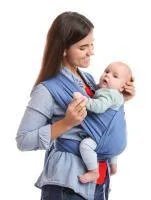
A baby sling or carrier can provide comfort and support for your baby, allowing you to carry your child hands-free, but RoSPA (Royal Society for the Prevention of Accidents) warns there are risks and some babies have been injured or have died.
- Newborn and young babies do not have strong neck control and cannot lift their head, so their airway can easily be blocked
- A sling’s fabric or fabric from the parent or caregiver’s clothing could cause suffocation
When wearing a sling or carrier, don't forget the T.I.C.K.S acronym:
- Tight
- In view at all times
- Close enough to kiss
- Keep chin off chest
- Support back
Download T.I.C.K.S [PDF]
General slings, wraps, carrier use
- Slings can be used to keep baby close, as part of responsive care.
- Parents should only use slings, wraps, carriers appropriate for baby’s size, age, weight and follow manufacturer’s instructions.
T.I.C.K.S advice, which ensures baby’s airway is open should be always used, for babies of ALL ages.
Breast and chest feeding
TICKS advice cannot be fulfilled when breast/chest feeding in a sling. To make sure your baby is safe if feeding in a sling:
- Make sure your baby’s chin is not tucked into their chest, as their airway needs to be clear at all times.
- Keep your eyes on your baby- ‘hands free’ and ‘brain free’ breast/chest feeding can’t be achieved in a sling.
This advice applies especially up until your baby is older and has developed their own head control.
Find how to stay safe using your baby carrier in our new leaflet Baby slings and carries - Nottinghmshire County Council [PDF]
More information can be found at:
- Safety and feeding in slings and carriers [YouTube video]
- Caring for your baby at night and when sleeping (UNICEF) [PDF]
- How to swaddle your baby or use a baby sling more safely (The Lullaby Trust)
- Baby slings (Royal Society for the Prevention of Accidents)
- Baby sling safety (National Child Mortality Database)
- Sling safety (Derby and Nottingham Sling Library)
Baby bath seats
One child a month drowns at home in England, with those aged under 5 being most at risk.
72% of parents using a bath seat believe it’s designed to keep a baby safe, but they are not a safety device. Of the ten babies who drowned in the bath in the last four years, seven were using a bath seat.
Always keep your baby within arm’s reach in the bath, even when using a bath seat.
More information can be found at
- Warning to parents on baby bath seats (opens in new tab) (opens in new tab) (Child Accident Prevention Trust)
- Splash Safety in Bath Seats (The Royal Life Saving Society)
Learn about bath safety for your baby, in this 50 second YouTube video, produced by National Child Mortality Database.
Baby walkers and bouncers
Physiotherapists and other Health Professionals DO NOT recommend the use of baby walkers.
There are two main reasons for this:
- Safety, even under supervision, there are high numbers of accidents reported every year including - falling down stairs, head injuries, burns, scalds, and trapped arms and legs.
- Delayed development, some studies have shown that baby-walkers do not encourage development and may actually delay the achievement of standing and walking, causing toddlers to walk on their tip-toes.
If you do choose to use these products the NHS recommends no more than 20 minutes per day, with close adult supervision.
More information can be found at
- The Association of Paediatric Chartered Physiotherapists (APCP) Babywalkers_June2024 Approved (417) [pdf]
- How to keep your baby or toddler active (NHS)
Dummy Clips and Teething Products
Some parents buy clips to hold dummies and teething rings in place and stop them from falling on the ground, but these are often from online marketplaces, made by home crafters or from abroad and have not been tested to check they comply with UK Safety Laws.
Common safety issues include
- Long straps or ribbons that could strangle a baby
- Small parts that break off easily and could choke a baby
- Toxic chemicals from the plastics or dyes used
Find tips to stay safe in our new leaflet Dummy Clips- Nottinghamshire County Council [PDF]
Nappy sacks
Nappy sacks have been identified as causing suffocation and choking of babies under one-year-old. Authorities in the UK have become aware of at least 18 deaths associated with individual nappy sacks. Having nappy sacks on a roll is safer.
More information can be found at What are the risks surounding nappy sacks (Royal Society for the Prevention of Accidents)
Learn about Nappy Sack safety, in this 40 second YouTube video, produced by National Child Mortality Database.
Safer sleep
Our friends at the Lullaby Trust have lots of information to help you understand about safer sleeping.
Don’t be tempted to buy products that are available such as baby nests, sleep positioners and some sleeping bags, as many of them don’t comply with safer sleep advice.
Find recommendation and tips to stay safe in our new leaflet Safe Sleep- Nottinghamshire County Council [PDF]
More information can be found at
- Sleep (Your Notts Directory)
- Product guide- to buying safer sleep essentials (The Lullaby Trust)
- Baby sleeping bags, Which options are safe? (National Child Mortality Database)
Self-feeding baby pillows
Baby self-feeding pillows or prop feeding devices are very dangerous and are a serious risk of death or injury as they cause babies to choke on the feed or have aspiration pneumonia.
The Government issued a product SAFETY ALERT because they CANNOT be made safe. Parents and carers are urged to STOP buying, STOP using and dispose safely of these products. Businesses must not sell them and if they do, they are breaking the law. Find out more, go to Product safety alert, Baby Self-Feeding Pillows or Prop Feeders (PSA3)
More information can be found at Self-feeding baby pillows unsafe (National Child Mortality Database) (opens in new tab)