
Find guidance to help families to keep their children safe from accidents and prevent serious injuries, at home.
On this page
- Top tips
- Blind cords
- Burns and scalds
- Button batteries
- Choking
- Cleaning products and other household chemicals
- Falls
- Pets
- Plants
- Super stong magnets
- Toy safety
- Water beads
Top Tips
- Keep hot drinks away from children – scalds from hot drinks are the most common accident with young children
- Always put cold water in the bath first and never leave your little one alone in the bath
- Always use a fire guard
- Do the ironing when small children aren’t present
- Be careful to put curling tongs and straighteners out of reach
- Use back rings on your cooker and turn the pan handles inwards, towards the back
- Make the kitchen “out of bounds” when you are cooking when little ones are there
- Keep household chemicals in the bottles they were bought in and keep them locked away out of reach of little hands at all times.
Further information at
- Baby and toddler safety (NHS)
- 10 baby products that could pose a serious safety risk (Child Accident Prevention Trust)
- Accidents to children (The Royal Society for the Prevention of Accidents) (opens in new tab)
- Be a Savvy Shopper Shop Smart Stay Safe (Child Accident Prevention Trust)
Blind cords
In the 3 years 2019 to 2022 9 young children died due to being strangled in a blind cord. Follow the guidance from RoSPA to check your blinds at home.
More information:
- Blind cord safety Secure, protect, prevent ( (opens in new tab) Royal Society for the Prevention of Accidents)
- Check your blind cords and keep your home safe (GOV.Uk)
- Blind cord safety campaign leaflet [pdf]
This 40 second YouTube video explains the need for blind cord safety, produced by National Child Mortality Database
Burns and scalds
In 2023 8551 children experiences severe burns in the UK, with 66% of them being babies and children under the age of 4.
According to the Children’s Burns Trust, burns from hot drinks and other liquids, kettles, electric hobs, hair straighteners, vapes and cheap chargers or lighters are the most common causes of burns to children. We’ve heard recently that there has been a burn to a baby from a heated soother for colic, so please be wary around young children as their skin is much more sensitive than an adults and they burn very easily.
Chemicals can burn as well as poison, so keep all household chemicals in their original container away from children.
More information can be found at
Infographic Burns and scalds to children in 2021 (Children's Burns Trust)
Button batteries
Button Batteries can badly hurt or kill a small child within 2 hours. This YouTube video Dangers of button batteries to children (YouTube) from the Child Accident Prevention Trust shows just how quickly the damage can happen.
If you think your child has swallowed a button battery, call 999 or take them to A&E straight away. Don’t make them sick or eat or drink.
Find tips to stay safe in our new leaflet Button batteries small but deadly! - Nottinghmshire County Council [PDF]
More information can be found at
- Button Battery Safety (Child Accident Prevention Trust)
- Why are button batteries so dangerous? Learn the risks (Child Accident Prevention Trust) (opens in new tab)
- What should you do if a child swallows a button battery? (Child Accident Prevention Trust) (opens in new tab)
Choking
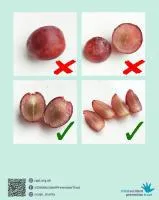
Children can swallow, inhale, or choke on some types of food and objects like small toys. Safety checks have found that 1 in 10 homes did not store small objects out of reach of children.
Food like hot dogs, sausages, cherry tomatoes, grapes and other soft fruit can choke a child. Slice them in half lengthways and half again. To learn more, visit the NHS Best Start in Life website
Learn how to avoid choking in small children, in this 30 second YouTube video, produced by National Child Mortality Database
Cleaning products and other household chemicals
On average 15 children under 5 are admitted to hospital every day in the UK as a result of being poisoned by household products. Household chemicals run the risk of giving chemical burns or poisoning your child if they are not stored out of reach of children, in their original, childproof packaging. This also includes hygiene and beauty products.
Always make sure that washing capsules are locked away as to little fingers they can look like sweets.
More information can be found at
Falls
It may seem obvious, but did you know that one child under five is admitted to hospital every day after falling from a building.
The Royal Society for the Prevention of Accidents (RoSPA) recommends that windows above the ground floor are fitted with restrictors with a child safety catch, to stop children falling out.
More information can be found at
- Falls from open windows (Child Accident Prevention Trust)
- Safer by design (Royal Society for the Prevention of Accidents)
Little children grow so quickly, one day they may not be able to roll off a bed or reach to climb on something high, when the next day they can and fall off with the potential for serious injury. Falls from stairs, high-chairs and changing tables can cause serious head injuries. Always use a stair gate and use safety harnesses with the high-chair or changing table.
As soon as your child starts using a bike make sure they have a safety helmet and if using a trampoline, make sure children and adults go on one at a time.
More information can be found at
- Falls factsheet_2024 ([pdf] (Child Accident Prevention Trust )
- Falls Information (Child Accident Prevention Trust)
- Cycle safety (Health Under 5s)
Pets
Dogs, cats and other pets are loved by children and they can be a good source of stimulation and education, but they should always be supervised as even the most placid of pets can snap if they are irritated or inadvertently hurt by an inquisitive child. Remember the bigger the dog, the stronger their grip if they bite.
Pets are also a potential source of diseases, most of which can be prevented by a few simple hygiene rules:
- Cats and dogs clean themselves by licking all over, spreading germs all over their bodies. Always wash hands after playing with an animal, especially before eating.
- Keep children away from pet beds so your pet always has a “safe space” where they can get away if they want to.
- Make sure your pet has his own dish and cutlery that is washed up separately from your dishes and gets to eat their meals without any child playing with them. Pet food can be a choking hazard for young children.
- Ideally your pet should not be fed in the kitchen, but if there is nowhere else suitable then make sure any leftovers are removed as soon as possible. Clean up any splashes and spills to prevent bacteria from multiplying or other pests being attracted. Pet food should not be stored in the refrigerator but in a suitable plastic container with a lid and stored in a cool place.
- Get pets are wormed every six months to prevent them carrying parasites that cause Toxcara disease, which can cause blindness in children. Cover sandpits when not in use.
- Put cat litter trays away from the kitchen and out of access to children.
This 50 second dog safety YouTube video was created by National Child Mortality Database
Plants
Do you know what plants are in your garden? Some foliage, seeds and berries can be poisonous, others may cause injury. Have you checked your garden recently?
The Royal Horticultural Society advises
- If it is not a food plant, do not eat it
- Teach children not to play with or eat growing plants
- Use gloves when pruning or weeding and keep skin covered
- Do not leave prunings or uprooted plants in reach of farm animals or pets
- Check plant labels for toxicity warnings (sometimes stated on label)
More information can be found at Potentially harmful garden plants (RHS Gardening)
Super stong magnets
The Office for Product Safety and Standards (OPSS) has issued a Safety Alert to warn of the risk of serious injury and death from swallowing small high-powered magnets.
This follows increasing reports of injuries and a small number of deaths after ingestion of magnets, particularly among children and young people, so parents and carers are being asked to keep these items away from children.
Get urgent medical treatment if you think your child has swallowed a magnet. Call 999 or go to A&E immediately.
More information can be found at Super strong magnets safety alert (National Child Mortality Database)
Toy safety
The following toys are most dangerous
- Toys with accessible button batteries that can burn through your child's food pipe
- Super strong magnets that can rip thorugh your child's belly
- Water beads that can block your child's bowel if swallowed
- Toys with long cords that can strangle your child
- Toys with small parts that can choke your small child
- Cheap electrical toys with exposed wires or chargers that can catch fire
- Squishy toys made with harmful chemicals and causing burns when heated.
Some toys, even from well-known retailers can be dangerous and second hand toys should always be checked carefully before use.
Check for
- Moving parts that might trap little fingers
- Loose hair, small parts, sharp edges and points, small parts, cords, ribbons, projectiles, plastic bags and batteries
- Button batteries are very dangerous for young children
- Splinters in wooden toys
- Attached strings or cords which could be a strangulation hazard for young children
- Consider whether the toy is sturdy enough to bear a child’s weight
- Whether child requires adult supervision or if the toy should only be used by children over a certain age
- Materials used to make the toy, check packaging for warnings and smell of chemicals.
Toy safety marks

The CE Mark shows the toy complies with EU directives on toy safety and the UKCA Mark shows that the product meets the essential requirements set out in the GB legislation.
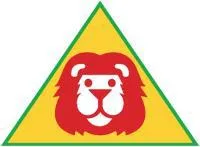
The Lion Mark shows that the manufacturer follows the British Toy and Hobby Association code of practice and complies with BS EB 71.
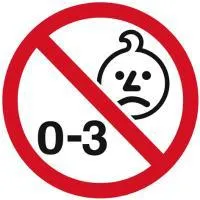
Toys that may be dangerous for children under 3 should also carry the statement “Warning: Not suitable for children under 36 months” plus indicate why, for example small parts choking hazard
More information can be found at Toy Safety (Child Accident Prevention Trust)
Water beads
The Office for Product Safety and Standards (OPSS) has issued a Safety Alert to warn of the risks that water beads can pose. The Safety Alert advises that water beads should be kept away from young children, under 5 years of age, and only used with older children or vulnerable adults under close supervision.
This is because they can expand up to 400 times their original size when exposed to liquid or when swallowed and cause choking and blockages. They are difficult to see on an X-ray and have been linked with child deaths overseas.
More information can be found at Safety Alert to warn of the risks of water beads (Office for Product Safety and Standards)(GOV.Uk)