
Here you will find information to help grandparents and other family carers to support their families, looking after grandchildren, and giving children the best start in life.
On this page
- Grandparents resources
- Child development and learning
- Play
- Healthy eating
- Learning to talk
- Managing behaviour
- Safeguarding children
- Safety
- First aid
- A new career
- Baby loss
Grandparents play an important role, from spending precious time with grandchildren, making memories that will last a lifetime, to giving parents a much needed break or time to continue their career or education.
Grandparents resources
Some useful websites for grandparents:
- Top tips and advice for grandparents (Age UK)
- The ultimate guide to grandparent rights in the UK (Mediate UK)
- Grandparents (Family Lives)
- Ideas and activities for grandparents to try with kids (CBeebies Parenting)
Child development and learning
There is no such thing as the average child. Children’s development can be assessed against stages and milestones, but it is important to remember that some children may achieve these earlier or later than others. If you have any worries, ask your grandchild’s parents whether they have similar worries and if so, advise them to speak to their GP, Healthy Families Team (Health Visitor), your child’s key person at Nursery, or to the team at the Family Hub.
Parents, grandparents and family members are the child’s first teacher, spending quality time together is important to a child’s learning and development, with children developing quickly in the first seven years of life.
Children learn through play, activities and experiences and by example from adults and other children.
What can I do, now I am …
3 months I can turn my head and eyes towards sounds and if I have some control of my head, I can have some tummy time.
Visit What is tummy time and how does it help baby development? (CBeebies Parenting).
6 months I can babble, roll over from my front to back and stretch out both hands to grasp and reach small objects.
Visit How can peekaboo help babies to learn? (CBeebies Parenting).
9 months I can babble tunefully, play social games, and start to pull myself up to standing using furniture to help me.
Visit Can you get your baby to babble more? (CBeebies Parenting).
12 months I can cruise while holding on to furniture, bear walk around the floor, and I can feed myself and I am active for 10- 11 hours out of the day.
Visit 12 surprising things your baby can do by their first birthday (CBeebies Parenting).
2 and a half years old I can run safely, use two words, follow two-word instructions, I will show you how I can turn the pages of a book and show you my preferred hand.
Visit How can you help toddlers say words properly (CBeebies Parenting).
3 years old I can Ask what? Why? Where? and who? Cut with toy scissors, hold a pencil, and join in others make believe play.
Visit Why is imaginative play so great for kids? (CBeebies Parenting).
4 years old I can stand on one foot and hop, hold a pencil, and draw a person, show sympathy for others and start to recognise my name in print.
Visit Talking about feelings with toys (CBeebies Parenting).
5 years old I can tell you my name and age, hold a to and fro conversation, skip and walk along a line, make friendships.
Visit Why do children have imaginary friends and should I worry about them? (CBeebies Parenting).
Drop the Dummy
Around the age of 2, try to keep dummies for sleep time only.
For information take a look at:
- Ditch the dummy and bottle (Derbyshire Family Health Service)
- Download Drop the dummy [PDF] (Nottinghamshire Healthcare)
Potty training and bed wetting
Children develop at different rates and whilst some will be ready for potty training around the age of 18 months to 3 years, others may be a bit later.
For information, advice and guidance take a look at:
- Top tips for potty training (Health for Under 5s)
- Your video guide to toilet training (Health for Under 5s)s
For bed wetting advice and guidance visit ERIC – the children’s bowel and bladder charity.
Sleeping
Getting enough sleep is a challenge for many families and grandparents can help support tired mums and dads by looking after a new baby, a teething toddler, or an early rising pre-school child, so they can get some rest.
Your local Family Hub and Healthy Families Team can help. Get in touch with them for support.
- Find your nearest Family Hub (Nottinghamshire County Council)
- Visit the Healthy Family Team service listing
Further information on sleep can be found on:
Play
Everyone likes a bit of down time watching their favourite programme on the television, but your grandchildren will love spending time doing anything with you much more than just watching telly!
Scary Fact: On average a 3 to 4 year old child spends over 27 hours a week watching electronic devices, so try and make at least some of the time they spend with you screen free.
Boys and girls should be able to choose to play with what games and toys they like, so please don’t stop your little grandson from playing with a dolly in a pram – after all one day he may be a daddy, or your little granddaughter climbing on a fallen tree as she will have to learn to take risks and be brave as she grows.
For more great play ideas take a look at our:
- Things to do at Home - find ideas for age appropriate activities you can try at home
- Things to do out and About - find baby and toddler groups, play parks, soft play and family days out
Try some of these play ideas with your grandchildren. When it’s time to finish, make sure your grandchild helps tidy away, telling little ones play time is finishing in 5 minutes.
Physical play
Here are some things you could try:
- Go for a nature walk
- Go for a bike ride
- Make a den with large cardboard boxes
- Turn large boxes into a car, spaceship and go on a journey!
- Give them an area in your garden to plant up and look after
Explore the world
Look at different countries, religions and cultures with your grandchildren. Explore your wider community, who might be celebrating a special event such as Diwali or Eid, that you could visit.
Visit Talking about race, and religion with young children (CBeebies Parenting)
Activities you could use to introduce new cultures and festivals:
- Books
- Jigsaws
- Ethnic dolls
- Craft activities
- Dressing up clothes
Explore your own family history
Telling them stories about when you were little, where you lived, your school or the games you played.
- Share old photos with them
- Make a scrap book together.
Construction play ideas
- Small boxes for junk modelling
- Wooden bricks
- Stickle bricks
- Duplo
Let their imagination run wild!
Painting:
Get your aprons on - it’s going to get messy!
- Halved vegetables or sponges are great for printing
- Paint onto doylies
- Use old baking cutters.
- Only paint on one half of the paper then fold it over.
- Paint on stones.
- Pour paint onto the paper and blow it using straws.
Stickies
You can use a range of things to create a sticky picture for example:
- Natural objects you have collected while on a walk or at the park.
- Wool or string
- Cut pictures out of a magazine.
- Material
- Objects according to season, festival, colours, shapes
You will need:
- Glue stick or glue pot
- PVA glue and spatula
- Paper or card
- Use the back of old wrapping paper or wallpaper.
Remember – it’s their picture, so they can do it how they want to. If you want to be in charge of a picture, do your own, sitting alongside them!
Messy play
Making playdough is as much fun as playing with it, so make it together! You will need the following:
- 2 cups of plain flour
- 1 cup of salt
- 1 tablespoon of oil
- 1 cup of water
- 2 drops of liquid food colouring optional
- 2 drops of essence optional to create a sensory experience
- You could also add mint or herbs.
Remember you can keep your playdough in an airtight container and keep it in the fridge it will last longer.
Games
A few ideas for games that you can play at home:
- Kim’s game: place a few items on a tray and cover it. Tell your grandchildren to close their eyes and remove an object, remove the cloth and let the children guess what object is missing.
- Play hide and seek: consider the age of the child/ children as some toddlers may only hide their heads.
- Skittles: Using empty pop bottles and add a small amount of water, making sure that the lid is tightly on. You could add some food colouring if you have any. Make a ball out of odd socks and you’re ready to play.
- Throwing: Using the sock ball and a bowl or bucket and throw the sock ball to see if you can get it in.
- Obstacle course: Create an obstacle course in a clear area, either inside or out. Use masking tape to make “balancing beams” and string to make hurdles to go under or over.
- Pop the bubbles: Using bubble solution or make your own recipe below:
- ½ cup of washing up liquid
- ½ cup of water
- 2 teaspoons of sugar
Provide bubble wands and have a jar with lid to store the solution in.
Home corner or mud kitchen
This can be done by using an upturned cardboard box to create a cooker and a bowl for a sink. Draw rings on the box to create the rings and buttons for a cooker and make an opening for the oven. Just add old pans, spoons for mixing, water, vegetables/peelings and a plastic knife for chopping, making sure that it is age and stage appropriate for your grandchild.
If you don’t have any “toy” teacups, bowls, plates,and jugs etc just use ones you no longer need.
Why not make your home corner into:
- A shop
- Hospital
- Café
- Hairdressers
- Post office
- Garage
Books
You can pick up a book from your local charity shop/ jumble sale/ car boot or join the library.
It’s free to join and use the library and it's a great place to visit with your grandchild.
In Nottinghamshire our library service is provided by Inspire Culture.
Visit Our Libraries (Inspire - Culture, Learning, Libraries) (opens in new tab)
For great reading recommendations take a look at Children's Books (Inspire - Culture, Learning, Libraries) (opens in new tab) .
Music
Songs with actions are great fun. Share music with them and ask them to share theirs with you.
How about:
- Twinkle, twinkle little star
- The wheels on the bus
- Wind a bobbin up
- I’m a little teapot
- If you’re happy and you know it
Cooking/ Baking
Think safety first: if the cooker is on then the kitchen should be out of bounds.
- Bake little cakes and biscuits together, decorating them is fun
- Using a safety knife get your child to chop up fruit and put the fruit cubes onto a skewer to create a healthy fruit kebab.
- Make a pizza portrait on a pizza base using vegetables, or on a cracker make a cute animal face.
- Play a food tasting game and ask the child/ children to describe the taste and smell.
Healthy eating
Many memories are made sat eating with grandparents, so make them happy ones that set your grandchildren up with a healthy lifestyle from the start.
The Eatwell Guide
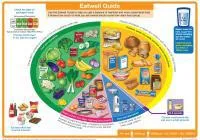
This guide shows how much of what we eat should come from each food group. It is a useful tool to help plan meals and snacks.
Download the Eatwell Guide (GOV.UK)
For more information visit:
- The Eatwell guide (GOV.UK)
- The Eatwell guide (NHS)
- A healthy balance diet (British Nutrition Foundation)
- Healthy eating (British Heart Foundation)
Me-sized portions
Serve the right about of food for your grandchild based on the size of their hand.
The portion size should be:
- Vegetables and fruit - fist size
- Protein - palm size
- Fats - fingertip size
- Carbohydrate - fist size
- Cheese - two fingers size
This diagram shows the amount of food a child needs – it’s clever as it increases as the child grows!
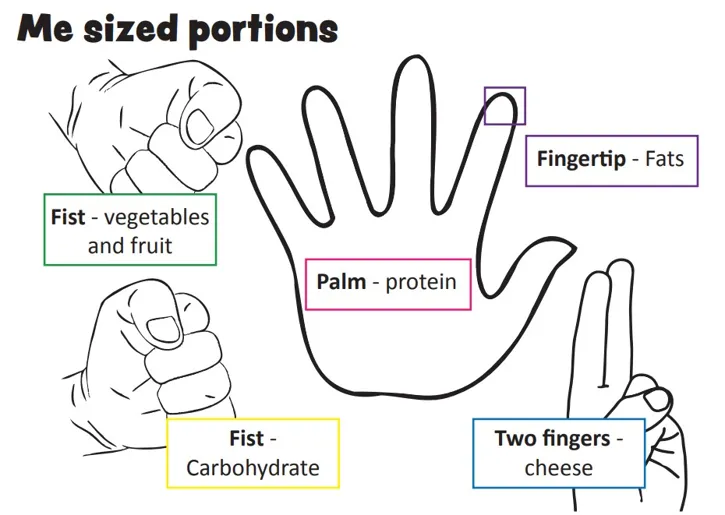
Learn about about Me-sized meals in Chat Health's video What’s a healthy portion for your little one? [Vimeo, 2 mins].
Food safety and tips
Be mindful about food hygiene and safety. Make sure food isn’t too hot to avoid burns and avoid choking by cutting up into small pieces for little children.
Tips for stress free mealtimes:
- Never force a child to eat or offer bribes to encourage them, as children are quick learners and will expect one every time.
- Be careful with snacks as they may not be hungry at mealtimes!
- Provide child size plates, beakers, bowls and cutlery.
- Always provide a drink of water with meals.
- When children are learning to feed themselves, be prepared for cleaning up mess!
- Avoid the use of salt, sugar and spices for babies and use sparingly for older children.
- Make sure you know of any allergies or food intolerance your grandchild has.
Feeding babies
Remember to hold the baby closely in your arms, so they feel secure. Never leave a baby propped up feeding with a bottle- they can choke to death on liquids.
If mum is breastfeeding, please be supportive. Breastfed babies often feed for lots of the time. You can help mum by getting her a cold drink, making sure she is comfortable, helping out with household chores or looking after older children.
Find information on supporting your daughter or daughter in law on our Breastfeeding page.
Weaning
Introducing solid foods is not recommended until babies are six months old. Not before unless under medical supervision. Remember how much your grandchild eats is less important than getting them used to the idea of eating.
For more support:
- How to start your baby weaning (NHS Best Start in Life)
- Baby Feeding and Weaning (Your Notts Directory)
Fussy eating
Try naming vegetables a silly name such as Bazooka Broccoli, Peewee Peas, Monster Mash Potatoes.
If you’re worried, take a look at Loughborough University’s award-winning Child Feeding Guide.
Weight
If you’re worried about your grandchild’s weight, encourage their parent to speak to the Healthy Families Team or for healthy eating ideas and fun activities to get your little one moving take a look at HENRY - Healthy start, brighter future.
Young children should never usually be put on a diet – rather their weight should be stabilised whilst they grow into their weight.
You can find more information in our Food and food support section.
Learning to talk
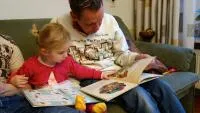
Children learn to talk, understand, learn new words and language skills by listening to adults and talking back to them as though having a conversation.
Even tiny babies follow this pattern as demonstrated in this 1 min YouTube video of a grandad and baby chatting together.
“Switch off and talk” is recommended by Language for Life because background noise can make it difficult for a child to learn.
Help your child to develop good listening and talking skills by:
- Having “special time together” talking about your day and future.
- Playing, reading and singing together.
- Turning off background noise when you are playing together.
- Having a limited amount of time that your child watches any electronic device.
- Watching a programme together and talking about it.
- Making sure that the programme you watch is age appropriate.
Find out more at How you can help your child (Nottinghamshire Healthcare).
Also take a look our Start Talking Together... part of the Best Start in Life Offer pages.
Managing behaviour
Try to keep your sense of humour and accept that children will be children. Unacceptable behaviour does not last for ever.
Top Tips:
- Praise positive behaviour.
- Use stickers to celebrate good behaviour and achievements.
- Remove privileges for school aged children such as laptops, computers, mobile phone.
- “Time Out” works well with children aged 3 to 10 years old. End it with a kind word and a cuddle.
- For little ones “Time Out” might be just sitting quietly with you looking at a book.
- Count to 10 before taking any action.
- Try not to shout or get angry as this only makes the situation worse.
- Don’t expect more than your grandchild can manage. The behaviour of a 3 year old will be different to what you should expect from a 7 year old.
- Try and avoid “triggers” for example, if shopping always ends in tantrums and unacceptable behaviour could you avoid it and go on a different day without the children.
- Give in gracefully over things that don’t really matter. Do you really need to be drawn into an argument with a small child!
- Be organised. Children like routines.
- Try to distract the child from the situation that is causing unacceptable behaviour. If tempers and emotions are running high a walk in the park for some physical exercise can often calm things down.
- It is illegal to smack children. Research suggests that smacking children is ineffective and bad for a child’s development. Adults should use other techniques and strategies.
Safeguarding children
The prevention and detection of child abuse is everyone’s responsibility.
If you are worried about a child you love, no matter how difficult it is, you need to flag it up with someone who can check it out.
- Contact the Multi-agency Safeguarding Team (MASH) on 0300 500 80 90
- The out of hours Emergency Duty Line (EDT) number is 0300 456 4546
In cases of emergency contact the Police.
Remember that child abuse happens to children of both sexes, at all ages and in all cultures, religions, social classes and to children with or without disabilities.
What to look for:
Identification of child abuse is difficult. Above all you know your family- don’t ignore anything you feel uncomfortable about.
Consider the following:
- Listen to the child, don’t ask questions.
- Seek medical assistance.
- Note any history or patterns of unexplained injury or illness.
- Beware of vague explanations, lack of detail or inconsistencies with what you observe or know.
For more support visit Spotting the signs of child abuse (NSPCC)
Hopefully you’ will never be in a position to have to use this knowledge.
For more information see Nottinghamshire Safeguarding Children Partnership’s website.
Safety
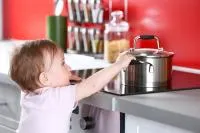
Most accidents to children under the age of 8 years old happen in the home. Most occur in the evening, with the most serious accidents happening in the kitchen or on the stairs. Boys are more likely to have accidents than girls.
Five causes account for 90% of unintentional injury hospital admissions for this age group and are a significant cause of preventable death and serious long-term harm.
These are:
- choking, suffocation and strangulation
- falls
- poisoning
- burns and scalds
- drowning
Top safety tips:
- Avoid choking by cutting up food into small pieces. For example cut a grape into quarters for little children; never leaving your grandchild unattended when eating; and never prop feeding a bottle fed baby.
- Be careful with small pieces such as beads and toy parts.
- Follow safer sleeping guidelines such as the Lullaby Trust Safer sleep information.
- Always put cold water in the bath first and never leave young children unsupervised in the bathroom.
- Never leave young children unsupervised around ponds, paddling pools or other water.
- Always use a fire guard.
- Do not iron when small children are present.
- Be careful to put curling tongs and straighteners out of reach.
- Do not light candles when children are being cared for and never leave portable heaters unattended.
- Use back rings on your cooker and turn the pan handles inwards, towards the back.
- Don’t try to drink your hot drink with a child on your lap.
- Never transfer anything which could be poisonous into another container, children have died from drinking paraffin or anti- freeze which was stored in a lemonade bottle.
Read more about child safety in the home and out and about on our Child safety page.
At what age can you leave a child alone?
Never leave a child in the home on their own not even for a couple of minutes. This is all it takes for an accident to happen. If a child is under the age of 16, the adult who has left them alone is still responsible for them.
Young children should never be left alone, but as the child moves from primary school to secondary school, it will start to become more appropriate to leave the child alone, starting with short periods of time.
Each child matures at a different rate, so this should be considered, rather than any standard age. It is also worth considering whether the child is alone or is with other children.
For more information visit Leaving Your Child Home Alone - Advice(NSPCC).
Hygiene
Top tips:
- If your grandchild uses a dummy, don’t put it back in their mouth if it falls to the floor. Don’t put it in your mouth to clean it either. Before it’s used again it needs to be sterilised.
- Keep flannels clean and boil washed to kill germs and change hand towels daily.
- Ensure everyone washes their hands after using the toilet and before eating.
- Do not bring wet or dirty nappies into the kitchen whilst food is being prepared.
- Practice good food and kitchen hygiene to prevent tummy upsets. Watch this video on 10 kitchen hygiene rules [YouTube, 6 mins].
Smokers
Many of the 55, 000 house fires each year are caused by smokers. Never leave cigarettes or pipes burning unattended and never smoke in bed.
Children who are exposed to second- hand smoke are at an increased high risk of respiratory infections. Avoid smoking when caring for children for their safety and health.
For more information on smoking take a look at NHS Passive smoking.
To quit smoking have a look at NHS Quit smoking.
Nottinghamshire County Council have commissioned Your Health Notts to support local residents to stop smoking.
Refer yourself by visiting Quit Smoking (Your Health Notts)
Smoke alarms
Many fires happen in the night and without a smoke alarm you won’t wake up in time to get out. Make sure you get awarning by investing in a smoke alarm.
You could contact your local fire station who will be able to offer advice and support on buying and fitting your smoke alarm.
Find out more at Smoke alarms (Nottinghamshire Fire and Rescue)
Out and about
Never leave a child outside a shop in a pushchair or pram. If they sleep in either of these in the garden, use an area away from the road out of sight of people who pass by, who could potentially abduct the child.
Never leave a child sitting in a car while you go to the shop or to school to collect older siblings take them with you. You may be gone longer than you think so consider the fact that the child may get out of their car seat or become ill.
Talk to your pre-school child about the dangers of strangers. School age children are taught about stranger danger. Make sure they know who is safe to go to if they become lost from you, for example a police officer, security guard or shop assistant.
Find out more on our Child safety - out and about page.
First aid
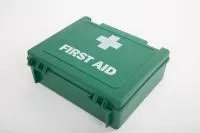
Call 999/112 for emergency help.
First Aid training
It is useful for everyone especially those having contact with children to receive basic first aid training. Short courses are available from St John’s Ambulance or Red Cross and any take place in local community venues. Your local Family Hub team regularly run Save a Baby’s Life short courses.
Babies and young children sometimes need a different approach to first aid, although the basic principles are similar for any patient. This is due to their smaller size and less developed respiratory systems.
St John Ambulance run a short Paediatric First Aid course specially for babies and children.
Find a first aid course near you (St John Ambulance)
More First Aid courses are delivered by:
Above all don’t forget that a cuddle and sympathy have a remarkable healing effect.
You may have some strategies of your own, such as rubbing a bruised knee and throwing the pain away or kissing it better, that works for your grandchild.
First Aid Box
Suggested contents for a First Aid Box:
- Disposable gloves
- Pack of (low allergy) plasters different sizes and shapes
- Small, Medium and large sterile gauze dressing
- 2 sterile eye dressings
- 1 Triangular bandages
- 10 Non- allergic sterile dressings
- 3 sterile unmedicated dressings medium)
- 1 sterile unmedicated dressing (large)
- 1 sterile unmedicated dressing (extra large)
- Safety pins
- Tweezers
- Scissors
Basic First Aid
The following guidelines are adequate for most situations:
Bleeding
Apply pressure for 5- 10 minutes with a clean sterile cloth to stop bleeding. Applying a dressing and obtain further medical assistance where it is appropriate.
Choking
- This is very frightening for the child and adult, but you will help matters if you try to keep calm. Prevention is better than being faced with an emergency so always chop up small items such as grapes into child sized pieces and make sure little parts such as beads or dried peas aren’t accessible for young children.
- Baby choking: check the mouth for any obvious obstructions and try and remove these safely as soon as possible.
- Child choking: If there is an obvious obstruction, tell the child to cough it out and only intervene if the child becomes weak. If necessary you may have to do an abdominal thrust. Either over your knee for a small child, or with your arms around a larger child. However it is really best to have had appropriate first aid training before you try these. If you manage to clear the blockage, it is still advisable for the child to receive medical attention if the choking was prolonged.
Feverish Convulsion
Although alarming, these are very common in babies and small children and are rarely dangerous. To try and prevent these occurring, cool the child down by removing clothing and bedclothes. Use tepid water all over from head to foot.
Give lots of calm reassurance and comfort. You may wish to use medication, such as Calpol (if this has been provided by the parent and its use agreed).
If a convulsion occurs, make sure the child can’t fall of hurt themselves. Put the child on the floor in the recovery position.
A new career
Perhaps you’ve retired early from your job or you fancy a change in career?
Have you thought about working in the childcare sector, being a foster carer or a personal assistant for a vulnerable adult?
Caring for your family over the years will have developed lots of the necessary skills and expertise that’s needed to work in these sectors.
Early years and childcare
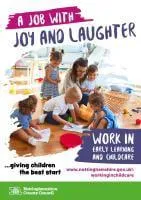
There are different jobs in the early years and childcare sector:
- Registered Childminder
- Nursery Nurse
- Childcare Worker/Practitioner
- Play Worker
- Early Years Teacher
Interested? Learn more about how rewarding a career in early years in this 2 min YouTube video from PACEY.
Find out more on our Working in Childcare page.
Foster Carers
Have you considered being a Foster Carer?
Fostering is caring for a baby, child or teenager in your own home, when they are unable to stay within their own family.
You can make a real difference to a child’s life by becoming a foster carer. Providing a caring environment to give them the opportunity to grow, develop and reach their full potential.
Interested? Find out what it is like to Become a foster carer in Nottinghamshire [YouTube, 15 mins] (opens in new tab)
Find further information about Fostering in Nottinghamshire (Nottinghamshire County Council)
Personal Assistants
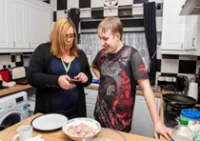
A Personal Assistant (PA) is someone who is employed to provide everyday care and support. This may include personal and domestic care, support to get out and about, as well as other day to day activities.
A PA can offer the most control over services as they are better able to support an individual's specific needs and promote independence.
Find out more about the Personal assistants at home network (Nottinghamshire County Council)
Baby loss
Very sadly, some babies are lost during pregnancy, birth or shortly afterwards.
This can be a heart-breaking and challenging reality for families.
For advice and support see our Loss of a baby or child section.
Or take a look at our Bereavement support section.