

Find advice and support on how to parent children together well when you are separating or apart.
On this page
- Co-parenting
- More relationship advice and support
- Mediation services
- Helping children during seperation
- Help with family problems
- Child contact services
Co-parenting
When parents are separating or apart, it's important that you both do what you can to help your kids to succeed.
Learn why separated parents who work together help children succeed in this 1-minute YouTube video:
Relationship advice and support from OnePlusOne
Children that grow up with stable, supportive relationships – whatever form they take – have better mental health and wellbeing.
OnePlusOne uses research evidence to create innovative tools to help people develop and maintain healthy parental relationships.
Getting it right for children course
When parents separate, it’s easy for children to get caught in the middle of their disagreements.
Getting it Right for Children is a free online course from OnePlusOne for parents in Nottinghamshire. It's designed to help parents parent co-operatively after parting.
To learn more, download Getting it Right for Children (OnePlusOne) course flyer [PDF]
You will need to register for a free account and choose Nottinghamshire to access the course.
Register for the Getting it Right for Children course (OnePlusOne)
Child roles and parent behaviours when parents separate
It can be difficult to parent together when separating or apart. Sometimes your behaviour towards your children or the other parent can impact your children in ways you don't realise.
Child roles: for separated parents
When parents separate, children can often feel like they're being put into different roles.
The Spy
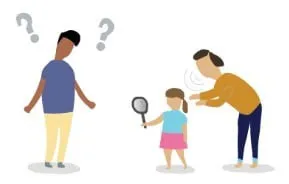
When you asking your child about their other parent, it can make them feel like a spy. They will want to give you the right answer, but they won't want to betray their other parent.
Instead, stick to general questions about the time they spent together. If you find yourself asking probing questions about your ex, ask yourself why you really want to know.
The Messenger
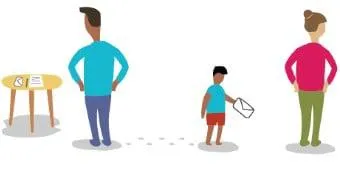
When you ask children to pass messages back and forth, it puts them in an uncomfortable position. They may worry that whatever they do, it will upset one of their parents.
Instead, find a way to talk to your ex directly. If that's not easy, try asking someone neutral to come along to help keep things calm and respectful.
The Counsellor
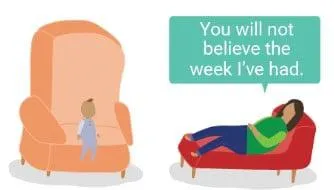
You may try to seek emotional support from your child. This can put them under pressure to try and make you feel better. It's not their job to support you.
Instead, if your child sees that you're upset, you can tell them how you are feeling. But let them know that you'll be OK, and that they don't need to worry.
The Mediator
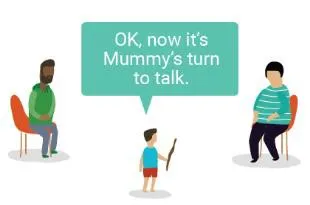
It can be extremely upsetting for children to see their parents arguing with each other. They may feel the need to try and solve the problem, which is too much responsibility for children.
Instead, let them know that these are problems for adults to solve. Reassure them that you both still love them, even though you're not together anymore.
Download and print this guide
Download Getting on Better Card: Child roles: for separated parents (OnePlusOne) [PNG]
Parent roles: for separated parents
When parents separate, they sometimes do things that can put their children in difficult positions. Do you recognise any of these behaviours?
Provoking your child's other parent

If you add to your ex's stress or anxiety, it can have a direct impact on your child. A parent who feels overwhelmed will find it harder to meet their child's needs.
Instead, think about your decisions from your child's point of view. Ask yourself, "How might this affect my child?"
Competing to be the favourite parent

Competing with your ex can mean you lose touch with what your child really needs. Most children just want their parents' time and attention.
Instead, focus on what your child needs from you. Ask yourself, "Am I doing this for my child's best interests, or for another reason?"
Badmouthing your child's other parent
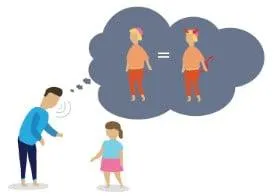
When parents badmouth each other, children can feel forced to choose sides. They may avoid telling you about problems because they'll be worried about your reaction.
Instead, if you need to vent, call on a trusted friend or family member. Work on finding solutions and make sure you protect your child from any negative exchanges.
Not letting your child talk about the other parent
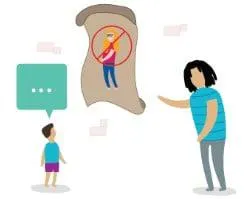
It can be painful to hear your child talk about their other parent. But if children think they are upsetting their parents, they may start to censor what they say.
Instead, remember that your child still loves their other parent. Show interest, say something positive, and try to smile - even if it's not always easy.
Download and print this guide
Download Getting on Better Card: Parent roles: for separated parents (OnePlusOne) [PNG]
More relationship advice and support
Our Family Wizard app
The Our Family Wizard app organises your schedule, files, contacts, and communication all in one app. Use it to document your parenting time, child-related expenses, exchanges, and more.
It can help you solve shared custody challenges faster and without confusion. This means means less conflict and more energy to focus on your children.
Learn more about Our Family Wizard app
Relate charity
If you're worried about how you're coping with emotions or your relationships, then Relate can help.
Relate has resources to help manage and reduce conflicts, including free AI tools for parents and co-parents.
Their free services for building better relationships include:
- Counselling services that allow parents to chat with a counsellor over the phone or online to strengthen their relationships Learn about Relate's counselling services
- Local support services delivered in your area to help you, your partner or co-parent, and your family. Find free local services on Relate's website
Mediation services
Many people find that Mediation is quicker, less stressful and less expensive than going to court. In most cases the court will expect you to consider Mediation seriously before going to court. A Mediator helps you and your ex-partner, without being on anyone’s ‘side’.
Mediation is free for people who qualify for Legal aid: Check to see if you qualify for legal aid
The Family Mediation Voucher Scheme is a government scheme to help families resolve disputes outside of court. If eligible, people can receive up to £500 towards mediation costs to encourage using mediation instead of court proceedings.
Find out more and if you are eligible Family Mediation Voucher Scheme (GOV.UK)
Search for Mediators that offer online services on the Family Mediation Council website
Helping children during separation
There's a lot happening after separating from your partner. It can be a time of great emotion and conflict.
You might be doing your best to protect your child from the impact of separation, but children pick up on many of these emotions and experiences.
They might need somebody to talk to who understands. These groups can help your child better understand what they're going through and help them feel heard.
Childline
When parents separate, the top priority in sorting things out should be the needs of the children. However, researchers have found that children are often left with no one to talk to.
Childline has a lot of good advice and suggestions for children and young people about how to cope.
Visit the Childline website to learn more
Family Justice Young People's Board
The Family Justice Young People's Board is made up of children and young people aged between 7 and 25 years who have had experience of the family justice system or have an interest in children’s rights and the family courts.
Learn more about the Family Justice Young People’s Board (Cafcass)
They have lots of advice for parents and professionals, including Top Tips for Parents who are separated [PDF]
Help with family problems
Advice Now relationship services
Advice Now is a free service with resources for separated and separating families on how to:
- organise arrangements for the children
- deal with new problems that emerge
- sort out the finances.
Their step-by-step survival guides:
- support readers to think through the issues and agree arrangements between themselves, or with the help of a mediator or solicitor.
- advise those that have no option but to go to court.
There is a charge for guides but these are available for free for those who cannot afford them – just press the ‘Request free guide’ button.
Using these guides also gives you access to Advice Now’s panel of resolution solicitors for a low-cost, fixed fee.
Resolution solicitors are committed to helping people resolve their family disputes in a constructive way that considers the needs of the whole family, in particular the children.
Advice Now can also help with other family issues, as well as housing and benefit problems.
Find out more at Helping you with life's problems (Advice Now)
The Parents Promise (Positive Parenting Alliance)
More couples discuss what they would do if they won the lottery than how they would co-parent their children in the event of separation.
The Parents Promise from the Positive Parenting Alliance is a commitment made today, whilst a couple is still together, about how they will do what’s best for the long-term wellbeing and mental health of their children, should their relationship break down in the future.
It aims to better protect children affected by family separation.
Learn more about the Parent's Promise in this 1-minute YouTube video:
To learn more and download your certificate, visit The Parents Promise website
Child contact services
Child contact, also known as access or custody, refers to arrangements between parents for how their children will spend time with each other.
National Society for the Prevention of Cruelty to Children (NSPCC)
NSPCC can help you learn about your rights around child contact and get advice for supporting children during a separation on Separation and divorce (NSPCC)
National Association of Child Contact Centres (NACCC)
NACCC is a charity dedicated to child contact, providing safe spaces where children can meet the parents they don't live with.
They have advice for:
- children and young people
- parents and family members
- professionals
Visit the NACCC website to learn more
Find a child contact centre near you
You can find a contact centre in your area and learn about how they work by going to Find contact centre (NACCC)
Support aimed at children and young people
Children and young people can learn more about divorce and separation and what will happen at a contact centre on FAQ for children (NACCC)
Read how a child contact centres help children and young people explore their emotions on For children and young people (NACCC)
There are also a range of helpful videos for young people (NACCC)
Return to Relationships Really Matter HomeGo to Videos for parents